This was my second oral report for my English final. Enjoy!
~ ~ ~
Adulthood has lost most of its original meaning with the onslaught of the postmodern age. No longer do the majority of teenagers long for adulthood so they can work and earn their own living in the world. Now, most teenagers dream of adulthood for the sake of gratifying their pleasures legally. Because the meaning of adulthood has changed in such a drastic way, it no longer holds as much weight as it once did. There is no journey to maturity and responsibility, but rather a sudden leap from one age to another that results in new privileges. George MacDonald wrote the story of a young man on his journey to the old sense of adulthood in his fairy tale, Phantastes. This story can teach young men and women of the postmodern age the importance of growing in wisdom to reach maturity and the value of acting with responsibility.
The main character of Phantastes, Anodos, first begins his journey to adulthood by leaving his world for Fairy Land. Before entering this enchanted land, Anodos is struck in his normal life with a deep longing for Fairy Land, which shows that he is made for another world. After a short time in Fairy Land he encounters his first and greatest enemy, the Ash tree, which symbolizes brute power and mastery. It nearly overcomes him, but with the guidance of various mature inhabitants of Fairy Land along the way, he is protected from harm. Anodos also discovers that the food he eats in Fairy Land satisfies his hunger and heightens his senses, bringing him into a more complete relationship with his surroundings. This symbolizes the act of communion. As he continues on his journey, Anodos falls in love with a white maiden who continually escapes him. Towards the end of his journey, Anodos reaches maturity when he discovers that his quest should never have been to seek to be loved, but to love another.
In order to begin a journey to adulthood such as what Anodos underwent, a young adult must start it with a mind ready to learn. Anodos learned much in Fairy Land because he very quickly learned one of his most important lessons: that of listening to those wiser than himself. Young adults will always need guidance from mature adults because they will undoubtedly make as many mistakes as Anodos did. To some degree young adults still need autonomy, since they need to learn how to think for themselves. By allowing them to make mistakes, they will learn never to make them again. Young adults also need a path to go down, like Anodos’ quest to find his white maiden. Aimlessly wandering will get them nowhere, but a quest will give them something to desire, a journey to learn from, and a prize to help them value their struggles. Above all, young adults need God on their journey, without whom they would never truly reach their goals.
While the postmodern age has brought horrific changes to the state of adulthood, and a decrease in the number of truly mature adults, it is not without hope. With stories like Phantastes still in existence, teenagers can be taught what it means to be an adult. They can learn that adulthood is not a set of privileges given as rights at a certain age, but is rather a state of mind achieved through hard work and difficult lessons. On top of this, no age is without hope since God is always in control. With God in control, no matter how immature teenagers may choose to stay, we can rest with the knowledge that God has a purpose for good in such times.
Showing posts with label essay. Show all posts
Showing posts with label essay. Show all posts
Saturday, December 20, 2014

Saturday, October 25, 2014
Essay: The One True Hero
This was one of my oral reports for my English final this year, in essay form.
~ ~ ~
One of the classic components of stories all throughout literature is the existence of a hero. These heroes have come in many different forms, from Hercules to Bilbo Baggins. As different in character and physique as these heroes may be, they share many common characteristics. Edith Hamilton recorded the stories of a wide range of characters with these qualifications in her book, Mythology. One hero who is not often referred to as such is Jesus Christ. While at first his servant’s story may seem completely contradictory to the wild adventures of Hercules and Bilbo Baggins, his story has much in common with theirs. He did not conquer his enemies through brute force like Hercules did, nor did he have a magic ring to make him invisible as Bilbo did. Instead, Jesus conquered the enemies that no hero before or after him can: sin and death.
To understand why such different personalities can have the same title, one must understand the essence of what it means to be a hero. One of the most essential aspects to a character being the hero of the story is that such a character must be given a quest. This can be directly called a quest, or it can be something the character chooses to do himself to right a wrong. The hero could be sent to retrieve a stolen object, rescue a damsel in distress, or perform any other noble act. On the road of his quest, the hero usually undergoes some sort of change, especially if the hero is not likable at the beginning of the story. At the end of this road, the hero is always victorious. Such heroes are not necessarily confined to literature—they can also exist in real life, but are easier to identify in literature.
In general, heroes in literature and in real life are equally important, though in different ways. Some real life heroes, such as firemen, are renowned for rescuing people in distress, just as many heroes in literature do. These heroes affect our daily lives in a more direct way than literary ones do, and often in a physical way. We have much to learn from the fictional lives of literary heroes, particularly as children. When children are introduced to and immersed in fairy tales, they are taught to rejoice with the hero when he is victorious over the villain of the story. Because these stories are entertaining and as a result can stick with us our whole lives, the morals behind the stories stick with us too. Above all, stories with victorious heroes teach us that our own enemies can be defeated by someone who is brave enough to take a stand.
Hamilton’s Mythology captures a wide range of Greek myths that can reach adults as easily as children. While there may be cultural differences between our lives and those of such mythological characters, many of the villains defeated by heroes in these stories relate to our own personal demons. One well-known hero from Greek Mythology, Hercules, was a strong warrior who defeated many enemies, but went insane and killed his whole family as a result. He then spent the rest of his life trying to atone for his sins, as many people from our own age try to cover over their sins with good deeds. None of the heroes presented in Greek myths are perfect—each have their faults. These heroes complete the quests given them, but they cannot complete the ultimate quest of all mankind—to defeat sin and death. Jesus Christ fulfilled this ultimate quest of mankind by atoning for all sins on the cross and defeating death by rising from it.
Hercules never could atone for his sins no matter how hard he tried, let alone atone for anyone else’s. He also did not defeat death. Even though he became a god according to the myth, he could not defeat death for everyone else. Death still reigns after Hercules’ quests were completed. The same goes for any other hero aside from Jesus. While we can learn from them the value of bravery and noble deeds, we must also take from them the understanding that only one man could and has defeated man’s greatest enemies. If we can admire literary heroes with so much zeal, how much more should we worship and serve the one hero who not only taught us as literary heroes do, but also saved us personally? No debt we could pay him would ever be enough, but he paid the price all the same because he loves us.
~ ~ ~
One of the classic components of stories all throughout literature is the existence of a hero. These heroes have come in many different forms, from Hercules to Bilbo Baggins. As different in character and physique as these heroes may be, they share many common characteristics. Edith Hamilton recorded the stories of a wide range of characters with these qualifications in her book, Mythology. One hero who is not often referred to as such is Jesus Christ. While at first his servant’s story may seem completely contradictory to the wild adventures of Hercules and Bilbo Baggins, his story has much in common with theirs. He did not conquer his enemies through brute force like Hercules did, nor did he have a magic ring to make him invisible as Bilbo did. Instead, Jesus conquered the enemies that no hero before or after him can: sin and death.
To understand why such different personalities can have the same title, one must understand the essence of what it means to be a hero. One of the most essential aspects to a character being the hero of the story is that such a character must be given a quest. This can be directly called a quest, or it can be something the character chooses to do himself to right a wrong. The hero could be sent to retrieve a stolen object, rescue a damsel in distress, or perform any other noble act. On the road of his quest, the hero usually undergoes some sort of change, especially if the hero is not likable at the beginning of the story. At the end of this road, the hero is always victorious. Such heroes are not necessarily confined to literature—they can also exist in real life, but are easier to identify in literature.
In general, heroes in literature and in real life are equally important, though in different ways. Some real life heroes, such as firemen, are renowned for rescuing people in distress, just as many heroes in literature do. These heroes affect our daily lives in a more direct way than literary ones do, and often in a physical way. We have much to learn from the fictional lives of literary heroes, particularly as children. When children are introduced to and immersed in fairy tales, they are taught to rejoice with the hero when he is victorious over the villain of the story. Because these stories are entertaining and as a result can stick with us our whole lives, the morals behind the stories stick with us too. Above all, stories with victorious heroes teach us that our own enemies can be defeated by someone who is brave enough to take a stand.
Hamilton’s Mythology captures a wide range of Greek myths that can reach adults as easily as children. While there may be cultural differences between our lives and those of such mythological characters, many of the villains defeated by heroes in these stories relate to our own personal demons. One well-known hero from Greek Mythology, Hercules, was a strong warrior who defeated many enemies, but went insane and killed his whole family as a result. He then spent the rest of his life trying to atone for his sins, as many people from our own age try to cover over their sins with good deeds. None of the heroes presented in Greek myths are perfect—each have their faults. These heroes complete the quests given them, but they cannot complete the ultimate quest of all mankind—to defeat sin and death. Jesus Christ fulfilled this ultimate quest of mankind by atoning for all sins on the cross and defeating death by rising from it.
Hercules never could atone for his sins no matter how hard he tried, let alone atone for anyone else’s. He also did not defeat death. Even though he became a god according to the myth, he could not defeat death for everyone else. Death still reigns after Hercules’ quests were completed. The same goes for any other hero aside from Jesus. While we can learn from them the value of bravery and noble deeds, we must also take from them the understanding that only one man could and has defeated man’s greatest enemies. If we can admire literary heroes with so much zeal, how much more should we worship and serve the one hero who not only taught us as literary heroes do, but also saved us personally? No debt we could pay him would ever be enough, but he paid the price all the same because he loves us.
Saturday, June 21, 2014
Question 7: Imagination
I apologize for not having posted in a while, but here's another essay from class. Enjoy!
~ ~ ~
How does a healthy imagination aid our faith?
Albert Einstein once said, “Imagination is more important than knowledge.” Imagination has enabled famous writers and creators of all time to use their knowledge to make what they have become known for. So why is imagination so often downplayed as food only for children’s books, and inapplicable to daily life? As important as children’s books are in the development of a healthy mind, many adults lose their sense of imagination upon reaching what they call maturity, and cast their sights into the modern realm of business. Even those adults who do cling to imagination generally do so to escape from a monotonous or painful life. Both views are, in fact, wrong. Imagination is a God-given gift that, if exercised properly, brings us closer to God.
Imagination is the ability to see or conceive of what is not yet present to the senses. In light of this, imagination and reality are not mutually exclusive. Imagination does not ignore reality, but is actually based off of it. When man creates anything, he creates a sub-reality of God’s reality as described in the book of Genesis. A sub-reality must somehow, however radical the idea behind it may be, adhere to God’s creation while at the same time depend upon the human ability to grasp abstract ideas. Because of this, the creation of sub-realities draws a man closer to God and his act of creation. Secularists, on the other hand, have come to view imagination as an escape from reality and comfort for themselves in their sinful ways. This view is wrong because while it acknowledges the existence of imagination, it ignores the importance of rationalism, both of which God created to be used in wisdom.
Just as imagination should not be used as an escape from reality, it should also not be avoided for the sake of the world’s idea of maturity by depending upon rationalism. Maturation is actually the integration of imagination and rationalism. Realizing that the world we live in is important, while still holding onto imagination, allows us to understand God in a deeper way than rationalism alone allows us to. Thus, to truly mature, a man must reconcile these two ideas, not ignore one or the other. Hebrews 11:1 says, “Now faith is the assurance of things hoped for, the conviction of things not seen.” This means that imagination allows us to know things that we cannot perceive. Thus, imagination enables us to have faith in God, who cannot be observed in the way rationalism demands we be able to.
Since we cannot observe God and his Church, we must have a healthy imagination to be able to grasp an idea of them. At the fall of man, a spiritual and physical gap was created between man and God which can now only be bridged by a faith in Christ. And to have faith, as we have seen, we need imagination. Thus, imagination is a tool necessary for salvation. Our imagination allows us to grow more like Christ by giving us the ability to create a world in which we can perceive God in a way our physical senses cannot. By creating such a world, we do not view our created world as more important than God’s creation, but rather build off of the necessary and vividly beautiful structure created by God for such an understanding of him. In addition, a healthy, well-developed imagination gives human beings, whether child or adult, the ability to wonder at God’s creation. This wonder has been expressed in a variety of Psalms, including Psalm 92:4, which says, “For you, O Lord, have made me glad by your work; at the works of your hands I sing for joy.” Without the sense of wonder produced through imagination, this verse would be meaningless.
Imagination is not a tool which can be claimed only by the profession of writers. It is a tool necessary in all walks of life, in every age, in every place. Imagination gives man the ability to seek after God’s goodness and beauty in whichever profession he goes into, be it mathematics, science, or writing. It allows him to create worlds based on the realm of rationalism which open up wells of truth that cannot be glimpsed through our worldly senses alone. Therefore, contrary to Einstein’s claim, imagination is not more important than knowledge because both imagination and knowledge are equally important. For without knowledge, one cannot exercise a proper use of imagination, but without imagination, knowledge is useless.
~ ~ ~
How does a healthy imagination aid our faith?
Albert Einstein once said, “Imagination is more important than knowledge.” Imagination has enabled famous writers and creators of all time to use their knowledge to make what they have become known for. So why is imagination so often downplayed as food only for children’s books, and inapplicable to daily life? As important as children’s books are in the development of a healthy mind, many adults lose their sense of imagination upon reaching what they call maturity, and cast their sights into the modern realm of business. Even those adults who do cling to imagination generally do so to escape from a monotonous or painful life. Both views are, in fact, wrong. Imagination is a God-given gift that, if exercised properly, brings us closer to God.
Imagination is the ability to see or conceive of what is not yet present to the senses. In light of this, imagination and reality are not mutually exclusive. Imagination does not ignore reality, but is actually based off of it. When man creates anything, he creates a sub-reality of God’s reality as described in the book of Genesis. A sub-reality must somehow, however radical the idea behind it may be, adhere to God’s creation while at the same time depend upon the human ability to grasp abstract ideas. Because of this, the creation of sub-realities draws a man closer to God and his act of creation. Secularists, on the other hand, have come to view imagination as an escape from reality and comfort for themselves in their sinful ways. This view is wrong because while it acknowledges the existence of imagination, it ignores the importance of rationalism, both of which God created to be used in wisdom.
Just as imagination should not be used as an escape from reality, it should also not be avoided for the sake of the world’s idea of maturity by depending upon rationalism. Maturation is actually the integration of imagination and rationalism. Realizing that the world we live in is important, while still holding onto imagination, allows us to understand God in a deeper way than rationalism alone allows us to. Thus, to truly mature, a man must reconcile these two ideas, not ignore one or the other. Hebrews 11:1 says, “Now faith is the assurance of things hoped for, the conviction of things not seen.” This means that imagination allows us to know things that we cannot perceive. Thus, imagination enables us to have faith in God, who cannot be observed in the way rationalism demands we be able to.
Since we cannot observe God and his Church, we must have a healthy imagination to be able to grasp an idea of them. At the fall of man, a spiritual and physical gap was created between man and God which can now only be bridged by a faith in Christ. And to have faith, as we have seen, we need imagination. Thus, imagination is a tool necessary for salvation. Our imagination allows us to grow more like Christ by giving us the ability to create a world in which we can perceive God in a way our physical senses cannot. By creating such a world, we do not view our created world as more important than God’s creation, but rather build off of the necessary and vividly beautiful structure created by God for such an understanding of him. In addition, a healthy, well-developed imagination gives human beings, whether child or adult, the ability to wonder at God’s creation. This wonder has been expressed in a variety of Psalms, including Psalm 92:4, which says, “For you, O Lord, have made me glad by your work; at the works of your hands I sing for joy.” Without the sense of wonder produced through imagination, this verse would be meaningless.
Imagination is not a tool which can be claimed only by the profession of writers. It is a tool necessary in all walks of life, in every age, in every place. Imagination gives man the ability to seek after God’s goodness and beauty in whichever profession he goes into, be it mathematics, science, or writing. It allows him to create worlds based on the realm of rationalism which open up wells of truth that cannot be glimpsed through our worldly senses alone. Therefore, contrary to Einstein’s claim, imagination is not more important than knowledge because both imagination and knowledge are equally important. For without knowledge, one cannot exercise a proper use of imagination, but without imagination, knowledge is useless.
Saturday, December 14, 2013
Essay: Finding Our Faces
Before reading this essay, I would recommend reading Till We Have Faces, the novel by C.S. Lewis this essay is based on. I hope you can understand my points without the background, but it's an excellent book, all the same.
~ ~ ~
Makeup, the internet, and programs for editing
photographs have made it easy to hide one’s true face. If a woman were not content
with her face, for whatever reason, she could hide it under a layer of fake
imagery to the point where she became another person. Such a practice has
become so commonplace that people have forgotten the importance of having a
face. A face does not exist to be pretty, but to distinguish between different
people. This idea of being different—of having an identity—has been lost to the
materialistic view that there is no moral or spiritual significance to a face. By
hiding the faces given to them at birth, such people become faceless in a
sense, seeking to blend in with the world’s common desire to be beautiful. C.S. Lewis worked with this idea of facelessness in his novel, Till We Have Faces, which he based on the myth of Cupid and Psyche. The idea Lewis
seemed to present in this work was that man has no face before God, unless he has been purged with the blood of Christ, when he is
given Christ’s identity.
One of Lewis’ characters in Till We Have Faces, Orual, demonstrated one of the world's uses for having
no face: hiding the ugliness of one’s true visage. Throughout the story, Orual
became progressively aware of her ugliness, not just physically, but
spiritually, too. And as a result, she decided to cover her face with a veil at all
times. Orual also despised the vulnerability of going about barefaced. Without
a veil, Orual’s eyes—which, in literature, are usually considered the windows
to the soul—were open for the entire world to see through. But when she covered
them with her veil, her identity disappeared. This idea of hiding is akin to
Adam and Eve’s fig leaves in the Garden of Eden, after they ate from the tree
of the knowledge of good and evil. They used their leaves to cover up the shame
of their sins, just as Orual used her veil to hide her sins from public view.
This protection served her well for a time, when she became the queen of Glome.

When Orual took the throne, her veil was no
longer merely a covering for her shame, but also a source of power. Orual’s
power came from the fact that she could see the men in her court, but they
could not see her, and thus could not judge how best to work with her. In a
similar way, man cannot see God in His entirety, but He can see us. Thus, Orual
tried to set herself up as a god. Orual’s facelessness was also similar to the
goddess Ungit, the deity of Glome. Because Ungit was merely a lump of rock in
the temple, and ergo had no face, the people (including Orual) had a tendency
toward imagining faces for Ungit. The people also imagined faces for Orual when
she wore her veil, varying between ravishingly beautiful and horrifying.
Man was made to have a face, and not just a physical one.
He was also made to have a spiritual face in the presence of God. But man, in
his sinful state, has no identity unless it is by the will of God Himself. This
is because without God, man has no worth, nothing to recommend him to God because of his sinfulness. A
man may try to be virtuous through his own power, but he will never be able to
do enough on his own that can cover the debt of his sins. However, Christ died
on the cross so that man could have standing with God. When Christ died and took on
man’s lowly identity, He gave man His, so that he could be righteous in the
presence of God. Thus, in a sense, man was given the opportunity to have
Christ’s face. In the same way, at the end of Till We Have Faces, Orual looked at her reflection and saw that she
looked like Psyche, her beautiful sister who had endured many trials for the sake of Orual.
Although physical beauty loses its purpose in death, the
idea behind putting in effort to make oneself appear falsely beautiful applies
to the soul, too. For if a woman’s goal in life is to be beautiful enough to fit
a man’s ideal in attractiveness, she simply becomes another face lost in the
crowd, having no identity. Her focus is centered on the world, not on what is to come
after this world has passed away. Orual’s veil in Till We Have Faces was another form of makeup, since without her true face to remind the people of her ugliness, she was considered beautiful by
almost the entire kingdom. At the end of the tale, though, Orual forsook her
veil and, after a series of visions and arduous tasks, received the beauty of
Psyche as her own. So too, Christians were given the beauty of Christ in the
eyes of God when He died, taking man’s ugliness upon Himself.
Saturday, November 16, 2013
Essay: Virtue
This essay may look very familiar to you. I posted this essay a few weeks ago, but it has since been expanded to reach the page limit for the Torrey application essay. I like this version much better than the previous one, and I hope you do too.
~ ~ ~
 stories and images begins to rub off on the learner.
~ ~ ~
C.S. Lewis once said, “No justification of virtue will
enable a man to be virtuous.” A
significant amount of weight lies in this single quote from Lewis’ essay, The Abolition of Man. For
instance, what is virtue? Once that question has been answered, more
arise. One such question is what Lewis
means by a “justification of virtue.” Another
question that demands to be answered is what will enable a man to be virtuous? In order to begin answering the last two of
these three questions, one must naturally answer the first. For many people, the nature of virtue is
ambiguous. For instance, many people
would agree that murder is wrong, but that lying is fine on occasion. This is perhaps why there are such firm laws
against murder but more convoluted ones on what constitutes lying, or fraud. But when all is said and done, the man himself
must choose whether or not to be virtuous, whether laws governing morality are
placed over him or not. Manmade laws
only serve as guidelines, not as concrete restraints. Whether or not a man is virtuous depends on
the choice of the man himself, though there are also ways to instill virtue in
him from a young age.
Virtue is not rational, insomuch as one cannot explain
what drives a man to die for his country without acknowledging the existence of
something outside of observable fact. The
act of being virtuous, or morally good, is not something mankind comes by
naturally. Virtue is prompted by the
conscience, God’s law of morality, which demands certain actions of man which
are morally good. In truth, every man
knows what is morally good, even if he does not always listen to the still,
small voice that teaches him. In a sense,
virtue has emotional as well as cognitive properties to it, since the heart
recognizes what is beautiful, and the mind seeks to copy that beautiful deed or
image. Returning to the example of a man
who is willing to die for his country, Lewis says in The Abolition of Man that such a man would not do such a thing out
of rationality. This is because a
rational man would seek his own preservation. Although the man could argue that he does so
for the benefit of future generations, he has not observed them and cannot
therefore say whether such a drastic action as his own death for his country
would, in fact, benefit them. Instead,
it is out of love that he does such a thing.
While virtue is not a rational concept, a man can attempt
to point out what is good and bad using his mind. He can make lists of moral and immoral
actions, but this does not make him virtuous. Such a man can be an excellent philosopher but
still be a scoundrel if he does not follow his own advice. This can be seen in the life of King Solomon. He became the wisest man alive, but acted
unwisely in following false gods. Becoming
virtuous is not just a cognitive action—one must integrate all the parts of
man: the mind, the body, and the heart. The
mind must listen to the heart when it tells him what is good, and the body must
act appropriately on what the mind knows is good.
In order to fully integrate these parts of man to become
virtuous, one should preferably begin learning and practicing virtue from a
young age. If a man starts learning to
become virtuous as an adult, he has already become so hardened in his ways that
it is difficult, though not impossible, for him to break his habits and follow
the calling of virtue. One good way to
learn virtue is to learn through example. Reading and hearing about virtue teaches about
the idea of virtue, but this only engages the mind. To engage the heart, selfless love from
another is required to awaken the heart to the beauty of virtue. By learning through example, the child does
not simply learn what virtue is, but also how it is to be acted upon. The child, or anyone who attempts to learn
virtue, should also saturate himself in the goodness, the truth, and the beauty
of God’s Word, and also in manmade art. The
latter of these is not as important as the former, but it helps the learner to
understand human nature and how virtue applies to it. After a while, such exposure to morally good
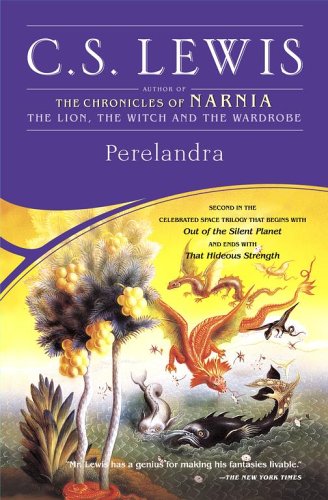
Literature is one of best ways to teach virtue from a
young age, or at any age, since a good novel has the potential to be both
entertaining and insightful. C.S. Lewis
himself wrote many novels that are still entertaining to both children and
adults, in the forms of The Chronicles of
Narnia and The Space Trilogy. These books explore many fascinating concepts
and give examples of virtue in action within imaginative settings that draw in
the reader’s attention. A young child
often can learn to be virtuous simply by reading such stories or having them
read to them. The trusting nature of a
child absorbs tales of virtuous knights like a sponge, aspiring to be virtuous
himself. An adult, on the other hand,
must generally make more of an effort to see and act on virtue in novels,
reverting usually to skimming over the goodness and truth of a novel to focus
on the beauty. Beauty is good, of
course, but a fixation on it, to the point where a man desires beauty for himself,
but does not seek it out for the benefit of others, is an erroneous desire. Theological and philosophical essays can teach
an adult about virtue as well, but stories teach what they cannot: how to hope
and dream for what is to come – for glory.
Parents must come to understand that no matter how much
they may attempt to shelter their children, their children will eventually be
on their own in the world and will inevitably encounter evil. Any child completely sheltered from evil
ideas, even if they have been saturated in goodness, having never been exposed
to the darkness before, could easily be overwhelmed by the enemy’s arguments
and succumb to them. A parent’s reaction
to this potential circumstance should not be to simply inoculate his or her
child’s mind with evil imagery but also to show the antithesis to the evils
shown to the child. There may not be a
rational counter-argument for every idea the child comes up across, but there
will always be a Biblical one. In
addition, a parent’s attitude in the face of an evil that he or she cannot
explain should not be to give up, but to seek out answers. Parents should also teach their children to
have this attitude of always seeking out answers, because if a person has this
attitude towards evil, he or she will be less likely to be overcome in the face
of a seemingly complete defense of sinful ideas. Even when exposing a child to evil in the
world, one should still avoid literature that dwells on evil to the point where
it is nearly glorified, like most teenage romance novels of the modern age. On the other hand, some books, like 1984, George Orwell’s dystopian novel,
portray evil in the proper form for such a purpose as exposing a child to the
evil of the world. Such a book shows
what evil truly is: something that should not be desired, something that should
be avoided in every case. Books that
portray evil as undesirable are important to read since they serve as warnings
against sin and, particularly in the case of 1984, apathy towards the evil actions of others.
Although everyone recognizes that there are moral and
immoral actions, there are those who would argue that virtue in the Biblical
sense either does not exist, or that it is unimportant. People who believe either case recognize morality
for their own purposes, seeking to promote it in others for their own benefit. Those who say it does not exist are generally
materialists, believing that this current, physical life is all there is, has
been, or ever shall be. They argue that
man’s capability for thought is merely an evolutionary advance, and that any
emotion he might feel is simply a chemical reaction within our bodies. People with this viewpoint must, of necessity,
deny the existence of a conscience, since there is no physical advantage of
having one. However, a conscience is
different from instinct in that it points out what is good for others, not what
is good for the self. To borrow an
analogy from C.S. Lewis, the existence of hunger proves that bread also must
exist, whether or not the hunger in question is sated by it. Following the same reasoning, because the
conscience exists in every person, whether or not it is heeded, it must exist
to promote virtue.
As to the second idea, that if virtue exists, it must be
unimportant, this is actually a common fault of many people who claim to be
Christians, and falls under the heresy of Epicureanism. Epicureans believe that, once they are saved,
it does not matter what they do since when they die they will receive the same
reward as Christians who do good works in life. As a result, Epicureans act on their fleshly
desires, living in the moment, and do not care for the good of others. The problem here is that a person’s actions in
life do matter in the long run. A man’s
actions are always taking him in one of two directions: down to Sheol, or to
eternal life with God. And even when a
man is saved, and the price of his sin has been paid, if he does not act on his
newly-acquired inheritance to become more like Christ, he has not truly grasped
the relationship he now has with God. For
a man who truly understands the nature of God will realize that God, as the
ultimate good, just, loving being that He is, is someone to aspire to become
like, no matter how good the man might already think he is. For instance, who would settle for begging on
the streets when every opportunity had been given him to rise to greatness? Acting on virtue is important because it
combats the darkness of the world and brings the virtuous person out of the
depths of sin and closer to becoming like Christ.
Overall, hearing about and knowing the concept of virtue
is not enough to be virtuous, just as C.S. Lewis stated. But knowing the concept is at least a start,
since a man must still build on that idea and choose to live in a world filled
with good, so that he may learn to be good himself. Even if it does come down to a person’s choice
as to whether or not he or she will not only know good, but also do good, the
person must have first somehow learned not only what is good, but what good
looks like in action. Learning what is
good can be done through extensive, thoughtful reading; observation of those
who are virtuous themselves; and reading of the Scriptures; to name only a few
methods. Mankind learns best through
imitation in most cases, and this is certainly applicable to learning virtue. Christians are called to be a light to this
dark world so that others who are lost can learn virtue through their good examples.
Saturday, November 9, 2013
Essay: Life, Death, and Bells
Once again I am posting an essay I wrote for class. This one is about a novel I read over the summer for my English class, The Nine Tailors, written by Dorothy Sayers. As it is a mystery novel (and a brilliant one at that!), I would recommend that you read the book before reading this essay, so that the ending is not spoiled for you. It may also help you to understand this essay.
~ ~ ~

~ ~ ~
A typical reader, upon picking up a copy of Dorothy
Sayers’ novel, The Nine Tailors,
might expect to have found a tale involving nine crime-solving men whose day
jobs are to adjust people’s clothing. As the reader becomes more involved in
the story, however, he or she will come to realize that a tailor, as an
occupation, has very little to do with the story. Instead the reader will
discover that the nine tailors from the title of the book actually refer to
church bells. This meaning, though not obvious at first, becomes the most
plausible meaning for the title. There is much mention of bells throughout the
book, but even so, why would such a great author as Dorothy Sayers title what
is dubbed her finest mystery novel after inanimate objects, instead of
something more profound? This question itself is flawed, because in the novel,
bells are more than just inanimate objects. While the meaning of the title of the
book has an obvious meaning apparent to anyone who reads the book, it also
possesses many deeper and far more important meanings. Thus, the title of the
novel is probably at its most profound.
The first, most apparent meaning for the title of the
book becomes known in the first few chapters; the nine tailors are the peals
rung for a dead man. Since the book is so focused on the work of the bells, it
is important to note that the bells also ring for births, baptisms, and
marriages, in addition to deaths. Thus, the existence of the bells is centered
around events involving life and death. The term “nine tailors” could also
refer to the ringers of the bells themselves. These ringers, who must of
necessity be alive, are the ones who ring the nine tailors for dead men. Since
life is required to announce the presence of death, life and death are once
again intertwined in the novel. This is an accurate portrayal of the reality of
life and death in real life, since in order for there to be a death, there must
have first been a life. The lives of these ringers are vastly important in the
story because not only do they deal with the bells, but they also have to do
with the Church itself.

One of the less obvious meanings of the title, The Nine Tailors, involves the symbolism
of the Church. In the time in which the book takes place, the Church in England
was very tied into life and death. For instance, Christians according to the
Bible die to their old selves in baptism. Also, in The Nine Tailors, the church represented life by acting as an ark
during the flood at the end of the story. The preacher in this church, Mr.
Venables, did his job and acted as the shepherd to his flock by guiding his
parish into safety. 1 Corinthians
12:12-13 says, “For just as the body is one and has many members, and all the
members of the body, though many, are one body, so it is with Christ. For in
one Spirit we were all baptized into one body—Jew or Greeks, slaves or free—and
all were made to drink of one Spirit.” This picture of the Church is
represented in The Nine Tailors in
more instances than just when Mr. Venables did his duty and saved his parish. For
example, towards the end of the book the main character, Lord Peter Wimsey,
unfolds how the victim was killed by the sound of the bells in the church
tower. However, it was not just the bells that killed the man—it was also the
fault of the ringers themselves. These ringers, members of the body of Christ,
worked together to carry out God’s justice in the man’s death.
Yet another important meaning of the title of the book
lies in how the justice of God was carried out. Mr. Venables suggests at the
end of the book that the bells acted as God’s messengers by killing the victim,
Deacon, for his sins. This idea is strengthened by Mr. Venables’ reminder that
one of the bells, Batty Thomas, has a reputation for having killed two other
men. In a conversation between Lord Peter Wimsey and Hezekiah Lavender,
Lavender said, “Yew ain’t no call to be afeard o’ the bells if so be as yew
follows righteousness.” Lavender means by this that the bells punish the
wicked, like Deacon. Not much can be said for the other two men Batty Thomas
killed, but Lavender’s statement definitely fits with the circumstances
surrounding Deacon’s death. More symbolism appears in the fact that Deacon died
within the church, while harboring sins of greed within his heart. On the other
hand, Lavender, a righteous man in this tale, lives to a ripe old age. This
once again ties back to the theme of life and death in the book, since the nine
tailors protect the lives of the righteous and punish the lives of the
unrighteous.
Sayers could have titled her book after its theme, life
and death, but she chose instead to add symbolic flair to the title yet still
hold true to the novel’s theme. The reader sees time and again that the book’s
theme, life and death, ties into the book’s title. This happens mainly when the
church bells cause the death of Deacon, but also because of the living men who
rang the nine tailors for the dead man. The physical church and the members of
the body of Christ both worked together to carry out God’s justice, again
relating back to life and death. So in the end, although Sayers did name The Nine Tailors after a set of
inanimate objects, these inanimate objects serve as a symbolic bridge between
what we observe and what she wants to teach the reader about life and death.
Saturday, November 2, 2013
Essay: The Moral Dimension of Grammar
The following is an essay I wrote last year for my English class. I apologize for posting so many old essays, instead of answering new questions, but NaNoWriMo is now taking up a lot of my time. Throughout the month of November I may not have time to do much more than this, but in December I hope to start back up again answering questions. If you have any you'd like me to answer, just post them in the comments!
~ ~ ~
Texting
lingo is threatening to take over the world. The world is becoming more and
more fast-paced, and as a result, abbreviations are becoming more and more
prevalent. Although abbreviations do allow for quicker communication, are they
really necessary, and in such abundance? Are they even as beneficial as has
been claimed? The answers to these questions lie in the very basis of grammar. Jane
Austen explores the use and importance of grammar indirectly in her novel Pride and Prejudice. In this novel,
whether or not her characters use correct grammar often speaks for their
morality. Jane Austen was a talented author who was able to read people’s
characters very well, so much so that if we look at people as she did, we can observe
the same ideas about grammar in others as she did. Overall, speaking with
correct grammar not only aids in clear communication, but it also affirms the
existence of God in an increasingly nihilistic world.
Almost
all of the characters’ uses of grammar in Pride and Prejudice speak for their
morality, but some of the more prominent examples are of Lydia Bennet, Mr.
Darcy, and Elizabeth Bennet. In Pride and
Prejudice, Lydia constantly uses slang when she speaks. She also speaks in
short, simple sentences for the most part. Mr. Darcy and Elizabeth go through a
much more complex development in their uses of grammar. For the first half of
the book or so, Mr. Darcy barely speaks at all to Elizabeth. On the other hand,
although
 Elizabeth speaks to Mr. Darcy more than he speaks to her, she is witty
and therefore unclear in her choice of words. Later on in the book, when Mr.
Darcy first proposes to Elizabeth, he is very clear and outspoken in his
address to her. In response, Elizabeth makes a point of telling Mr. Darcy
exactly what she thinks of him. Once this is made known to Mr. Darcy, he
leaves, but writes her a letter with an explanation of his actions up to that
point.
Elizabeth speaks to Mr. Darcy more than he speaks to her, she is witty
and therefore unclear in her choice of words. Later on in the book, when Mr.
Darcy first proposes to Elizabeth, he is very clear and outspoken in his
address to her. In response, Elizabeth makes a point of telling Mr. Darcy
exactly what she thinks of him. Once this is made known to Mr. Darcy, he
leaves, but writes her a letter with an explanation of his actions up to that
point.

The
words and actions of Lydia, Mr. Darcy, and Elizabeth all correlate with the
idea that there is a moral dimension to grammar. After all, the definition of
morality implies that there is a right and a wrong action, thought, or feeling.
When compared with grammar, one sees that there is a right and a wrong use of
grammar. Lydia uses grammar improperly throughout Pride and Prejudice, though perhaps not to the extent that it is
misused today. The end of the story makes clear to the reader that Lydia has
made bad choices, and continues to do so. This is not a direct result of her
using improper grammar, but it does show that she subscribes to faulty morals.
Mr. Darcy and Elizabeth show what happens both when improper grammar is used,
and what happens when proper grammar is used. When the two do not communicate
well, they misunderstand each other and are tainted by pride and prejudice.
When the two begin to communicate with each other more, they discover how wrong
they each were and as a result grow closer together. Thus, when the characters
do not speak clearly, there is definitely a correlation to their morals.
Morality
does not just correlate with grammar in stories; it applies to real life, as
well. In “The Real Reason Our Educational Elites Don’t Like Grammar,” by Martin
Cothran, Cothran writes that grammar is based on the existence of right and
wrong. Right and wrong implies that morality must exist, and therefore implies
the existence of God. Cothran also talks about Nietzche and how he was opposed
to the use of grammar. He says that Nietzche was not opposed to grammar itself,
but being a nihilist, was opposed to what it was based on. Nietzche did not
want to use correct grammar because he wanted to kill God. Thus, the obvious
reaction to this for a Christian is to speak correctly.
Every time a person speaks
clearly, he or she affirms the existence of order, and ergo of God. If modern
teenagers continue to use texting lingo as they do, followers of Nietzche’s
prophecy may believe they have won. But the introduction of cell phones to the
world is not the end of God, and never shall be. God is not merely an idea—He
is the creator of ideas, and must always exist for anything else to exist. No
matter what man can say, he will always exist, and therefore God will always
exist. Even if we cannot count on humanity to remain educated in the proper use
of grammar, we can count on God to exist to maintain order.
Saturday, October 26, 2013
Essay: Virtue
This is yet another essay I have written for my philosophy class. It is based off of a quote from C.S. Lewis' The Abolition of Man.
~ ~ ~
C.S.
Lewis once said, “No justification of virtue will enable a man to be virtuous.”
There is a lot of weight to this single quote from Lewis’ essay, The Abolition of Man. For instance, what
is virtue? Once that question has
been answered, more arise. One such question is what Lewis means by a
“justification of virtue.” And of course, what will enable a man to be
virtuous? In order to even begin answering the last two of these three
questions, one must naturally answer the first. For many people, the nature of
virtue is ambiguous. For instance, many people would agree that murder is
completely wrong, but that lying is fine on occasion. This is perhaps why there
are such firm laws against murder, but slightly vague ones on lying, in the
form of fraud. But when all is said and done, it is the choice of the man
himself that allows him to be virtuous, whether laws governing morality are
placed over him or not. Rules only serve as guidelines, not as concrete
restrictions. But although whether or not a man is virtuous depends on the
choice of the man himself, there are ways to instill virtue in him from a young
age.
Virtue
is not rational, insomuch as you cannot explain what drives a man to die for
his country without acknowledging the existence of something outside of
observable fact. The act of being virtuous, or morally good, is not something
we come by naturally. Virtue is prompted by our conscience, God’s law of
morality, which demands certain actions of us which are morally good. In truth,
everyone knows what is morally good, even if they do not always listen to the
still small voice that teaches them. In a sense, virtue has emotional as well
as cognitive properties to it, since the heart recognizes what is beautiful,
and the mind seeks to copy that beautiful deed or image. Going back to the
example of a man who is willing to die for his country, Lewis says in The Abolition of Man that such a man
would not do such a thing out of rationality. This is because a rational man
would seek his own preservation. Although he could argue that he does so for
the benefit of future generations, he has not observed them and cannot
therefore say whether such a drastic action as his own death for his country
would, in fact, benefit them. Instead, it is out of love that he does such a
thing.
While
virtue is not a rational concept, a man can attempt to point out what is good
and bad using his mind. He can make lists of morally good and bad actions, but
this does not make him virtuous. Such a man can be an excellent philosopher but
still be a scoundrel if he does not follow his own advice. So much can be seen
in the life of King Solomon, in the Bible, when he became the wisest man alive,
but acted unwisely in following false gods, after he was commanded not to by
God. Becoming virtuous is not just a cognitive action—one must integrate all
the parts of man: the mind, the body, and the heart. The mind must listen to
the heart when it tells him what is good, and the body must act appropriately
on what the mind knows is good.
In order
to fully integrate these parts of man to become virtuous, one should preferably
begin learning and practicing virtue from a young age. If a man starts learning
to become virtuous as an adult, he has already become so hardened in his ways
that it is difficult for him to break his habits and follow the calling of
virtue. One good way to actually learn virtue is to learn through example.
Reading and hearing about virtue certainly teaches about the idea of virtue,
but this only engages the mind. To engage the heart, selfless love from another
is required to awaken the heart to the beauty of virtue. By learning through
example, the child does not simply learn what virtue is, but also how it is to
be acted upon. The child, or anyone who attempts to learn virtue, should also
saturate themselves in the goodness, the truth, and the beauty of God’s Word,
and also in manmade art. After a while, such exposure to morally good stories
and images begins to rub off on the learner.
Overall,
hearing about and knowing the concept of virtue is not enough to be virtuous,
just as C.S. Lewis stated. But knowing the concept is at least a start, since you
can still build off of that idea and choose to live in a world filled with
good, so that you may learn to be good yourself. Even if it does come down to a
person’s choice as to whether or not they will not only know good, but also do
good, the person must have first somehow learned not only what is good, but
what good looks like in action. We learn best through imitation, which is
certainly applicable to learning virtue. We are called to be a light to this
dark world so that others who are lost can learn virtue through our good
examples.
Saturday, October 12, 2013
Essay: Peeling the Onion
My post for this week has been adapted from an essay I wrote in my philosophy class this year. While this essay seems clear enough to me to understand without having read either That Hideous Strength (the last book of C.S. Lewis' Space Trilogy) or The Inner Ring, I would highly recommend reading both.
- - -
A common
issue faced by believers and unbelievers alike is that of peer pressure.
Usually peer pressure becomes a problem for believers when a person’s peers try
to convince the person to do something sinful. However, even for unbelievers
peer pressure is an issue when the action in question involves taking drugs, drinking
alcohol, or other unlawful deeds. While unbelievers may not accept sin as a
valid reason for avoiding peer pressure, they do often accept breaking the law
as a good reason. C.S. Lewis did an excellent job covering the idea of peer
pressure in his paper titled The Inner
Ring. He also applies the same ideas he discusses in The Inner Ring to his novel, That
Hideous Strength, in the shape of his character Mark Studdock. His
representation of peer pressure in the form of Studdock not only reveals the
danger of the Inner Ring, but also what it takes to remove oneself from the
temptation of it.

According
to Lewis, Inner Rings exist in almost every part of life, especially in
universities. He represents the main concept of the Inner Ring as an onion
which a person continues to peel the layers off of. Eventually, all the layers
will be peeled back and nothing will remain. The closer you get to the center
of the onion, the less the onion is valued. Lewis also says that the Inner Ring
is not necessarily evil, but that it is unavoidable. For instance, friendships
formed between coworkers are not evil, but are in fact good. The idea of the
Inner Ring can lead to evil, though. When the members of the Inner Ring follow
a certain practice, anyone who doesn’t follow that practice immediately becomes
an outsider. So if the Inner Ring became sinful, virtuous people would be
outsiders, and anyone trying to be an insider would necessarily become a
scoundrel. Overall, the main idea behind the Inner Ring is that of belonging to
something or someone. This is because all humanity is made to want to belong,
since we all belong to God.
Mark
Studdock, in Lewis’ novel, That Hideous
Strength, lived by this idea of belonging. In the beginning of this story
his wife Jane was, in Studdock’s mind, only a part of this plan as a trophy. He
did not value her for herself, but for what she might bring him in his attempt
to belong to the Inner Ring. Studdock wanted to be viewed as one of the
academic elite by becoming important in Bracton College. As Studdock progressed
further into the Inner Ring, he rarely agreed with the ideas and methods of his
colleagues, but he followed along with them so that he would not lose his job.
Even though there was a darker purpose behind what the N.I.C.E. (one of the
Inner Rings Studdock found his way into) did, Studdock mainly chose to ignore
it and to simply belong. He was pulled into evil actions and purposes merely by
his instincts.
When
Studdock finally came to realize the evil he had become a part of, he was
disgusted and rebelled against his captors. Even before this point, Studdock
had found very little to like about his new colleagues in the Inner Ring. He
was repelled by Fairy Hardcastle, annoyed by Withers, and terrified of The
Head. Studdock was also frustrated upon first entering the N.I.C.E. because he
was not allowed to follow his career. When Studdock was taken captive by Frost,
who tried to eradicate Studdock’s instincts, Studdock came to hate Frost and
merely pretended to go along with his ideas. In the end, after Studdock had
seen the truth behind the Inner Ring and was disillusioned by it, he escaped
with the aid of Mr. Bultitude and Merlin.
The help
Studdock required in escaping the Inner Ring provides an interesting
illustration of how we cannot escape the power of the Inner Ring without help,
as well. Our help, however, comes from God. But in order to escape, we also
must want to leave. We must first
break the power of the Inner Ring by understanding how pointless it is, and by
going on with our proper work. When we have done this, we become what Lewis
calls “sound craftsmen,” people who do what they are meant to do with their
professions. Lewis also calls this group of sound craftsmen an Inner Ring of
its own—one full of worthwhile people and worthwhile work. This is what
Studdock truly wanted all along, but never found in the N.I.C.E. We too, in
order to avoid falling into the same trap as Studdock, must find our Inner
Rings of sound craftsmen to fill our lives with truth and goodness.
Subscribe to:
Posts (Atom)